Home › Tea guides › How to brew hojicha
Brewing guide
How to brew hojicha, Japan's roasted green tea
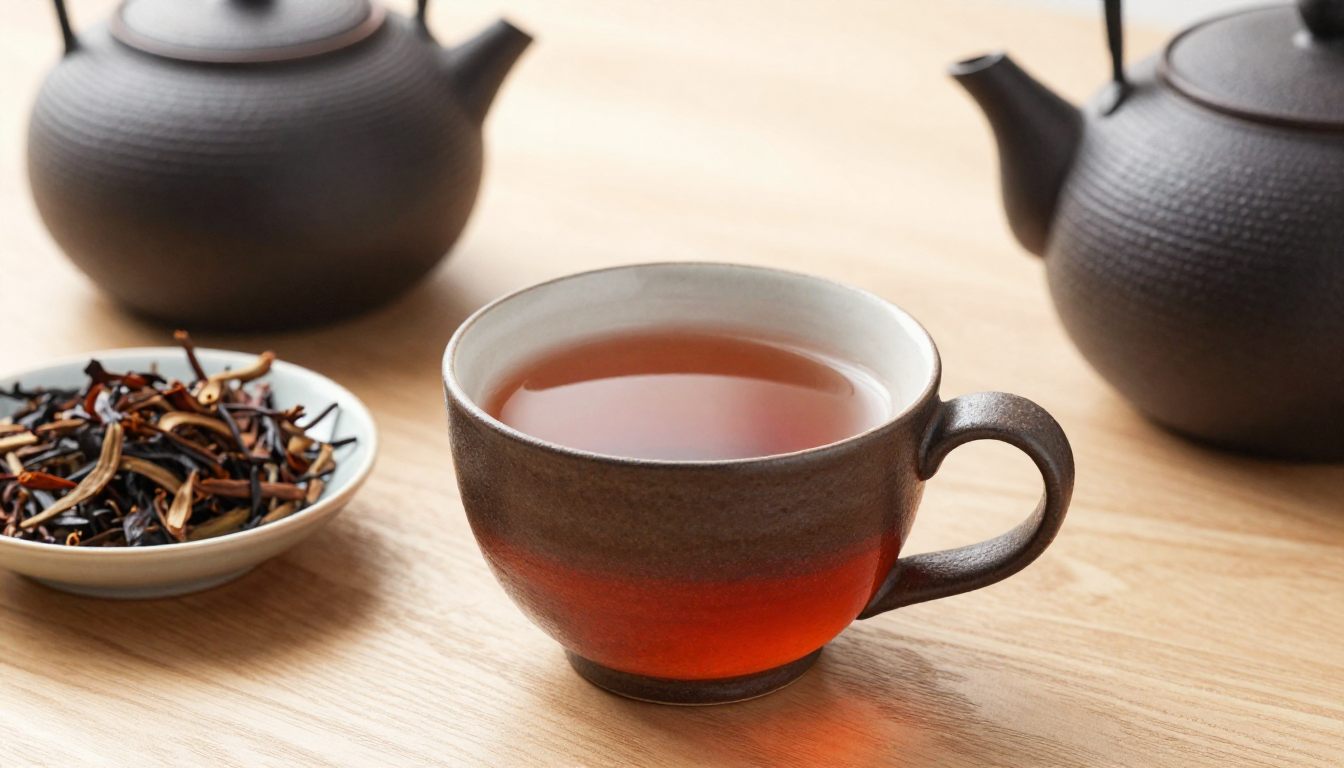
Hojicha is green tea that has been roasted until the leaves turn a warm chestnut brown. It brews a reddish-amber cup that tastes toasty and caramel-like, with very little bitterness. It's also one of the easiest Japanese teas to brew well.
Hojicha at a glance
What is hojicha?
Hojicha (ほうじ茶, pronounced "ho-jee-cha") is a Japanese green tea that's roasted over high heat after it's made. Roasting turns the leaves from green to reddish-brown and changes the flavour completely: the grassy notes of green tea give way to toasted grain, nuts, cocoa and a gentle caramel sweetness.
It was first roasted in Kyoto in the 1920s, and today it's an everyday tea in Japan, often served after meals and in the evening. It has a calm, comforting character, a bit like the tea version of a toasted marshmallow.
Does hojicha have caffeine?
Yes, but not much. Hojicha is made from green tea, so it is not caffeine free. It is naturally low in caffeine compared with sencha, black tea or coffee, which is why many people in Japan drink it in the evening. If you need to avoid caffeine completely, choose a herbal tea such as camomile or peppermint instead.
How to brew hojicha tea bags
- Heat the water to 80–90°C. If you don't have a temperature kettle, boil it and wait about a minute. Hojicha is forgiving: unlike sencha, slightly hotter water won't make it bitter.
- One bag per cup. Use one tea bag for a 200–250ml mug.
- Steep for 2–3 minutes. Two minutes gives a light, sweet cup; three gives a deeper toasty flavour.
- Re-steep if you like. The same bag makes a lovely, lighter second cup. Steep it a minute longer.
How to brew loose leaf hojicha
Roasted hojicha leaves are large and light, so measure generously: a heaped teaspoon is about 3g.
- In a small teapot (kyusu): 3–5g of leaves for 150–200ml of water at 90°C. Steep for 30–60 seconds and pour out every drop. Re-steep 2–3 times, adding about 15 seconds each time.
- In a mug with an infuser: one heaped teaspoon per 250ml. Steep for 2–3 minutes, then lift the infuser out.
Tip: warm the cup or teapot with a splash of hot water first. Hojicha's roasted aroma is at its best when the tea stays hot.
How to make a hojicha latte
Hojicha's toasty flavour is lovely with milk, and it's a popular café drink in Japan. You don't need any special equipment.
- Steep 2 tea bags or 2 heaped teaspoons of loose leaf in 100ml of water at 90°C for 3–4 minutes. You want it strong.
- Meanwhile, heat 150ml of milk (dairy, oat or soya all work well). Froth it with a whisk or by shaking it in a jar if you like.
- Remove the bags or strain the leaves, then pour the hot milk over the tea.
- Sweeten with a little honey, maple syrup or brown sugar to taste.
How to make iced hojicha
For a smooth summer drink, cold brew it: put 3 tea bags or 2 heaped tablespoons of loose leaf in 1 litre of cold water, cover and leave in the fridge for 6–8 hours. Strain and pour over ice. Cold brewing brings out hojicha's sweetness and very little bitterness. Drink it within 24 hours.
Like iced tea? Try our iced peppermint tea recipe for a caffeine-free version.
What does hojicha go with?
- Rice dishes, noodles and Japanese food, as it's served in Japan
- Shortbread, biscuits, chocolate and anything with caramel or nuts
- A quiet evening, when you want something warm but lighter on caffeine
Hojicha vs sencha
Both are Japanese green teas, but they taste very different. Sencha is steamed and dried, so it stays green, fresh and grassy, with more caffeine. Hojicha is roasted, so it's brown, toasty and mellow, with less caffeine. Sencha suits the morning; hojicha suits the afternoon and evening. Read our sencha brewing guide to try both.
Quick answers
Why does my hojicha taste weak?
Use a little more tea rather than steeping for much longer. Hojicha leaves are bulky, so a level teaspoon is less tea than it looks.
Can I use boiling water for hojicha?
You can. It's one of the few green teas that copes with very hot water. 80–90°C gives a slightly sweeter, softer cup.
How should I store hojicha?
Keep it sealed in its resealable pouch, away from light, heat and strong smells such as coffee or spices.